The Newel Post: Myths, Secrets and History at the Foot of the Stairs | Real in Cincy
The Newel Post: Myths, Secrets and History at the Foot of the Stairs
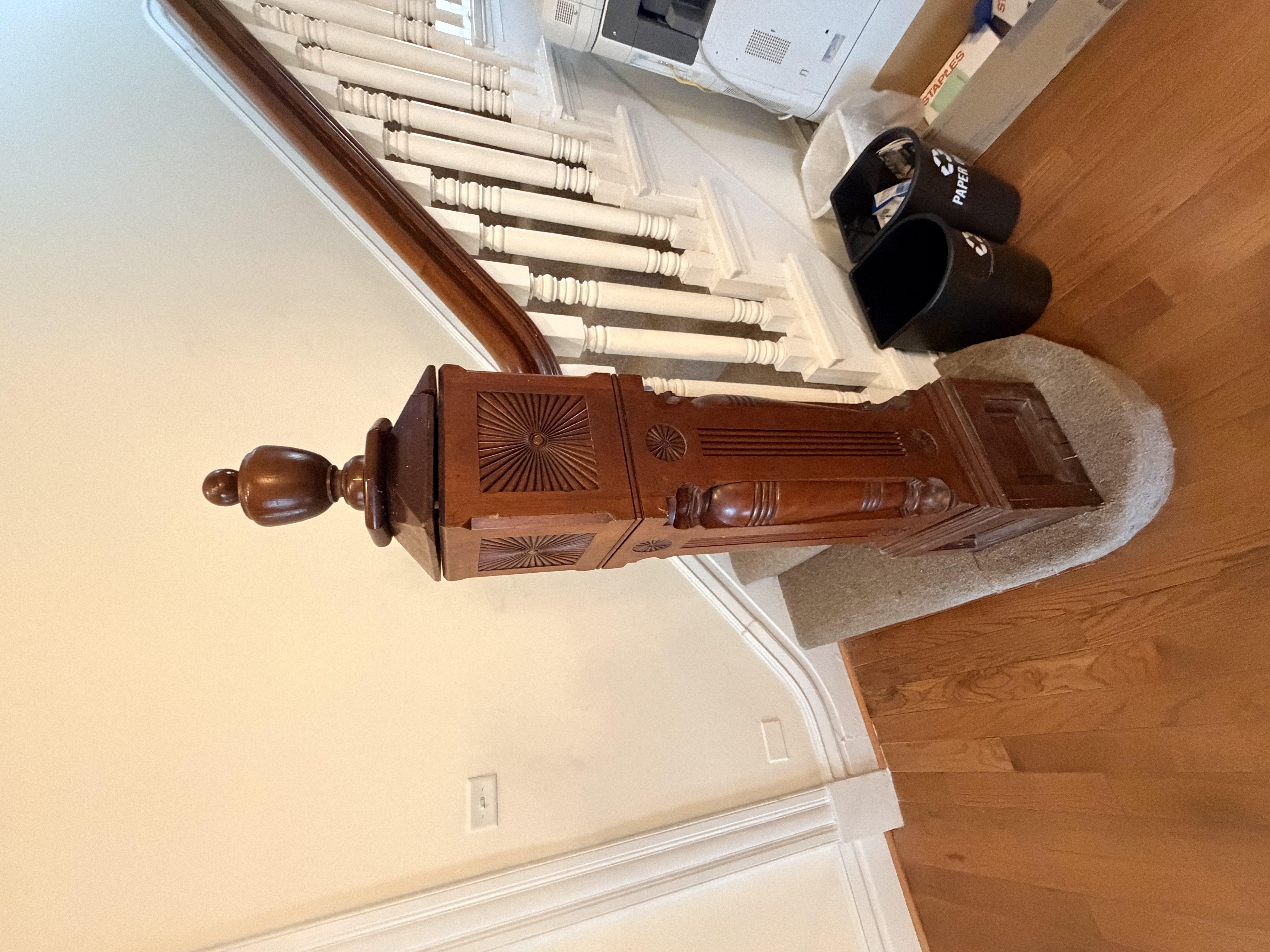
Walk into almost any older home in Cincinnati and the first thing to greet you might be the newel post, the big, sturdy post at the bottom of the staircase. It anchors the whole railing. In a Victorian home, it was also meant to impress.
What does a newel post do?
The newel post is the main support for a staircase railing. It holds the handrail steady and takes the push and pull of everyone grabbing it on the way up or down. In historic homes, it was also the decorative centerpiece of the front hall.
A status symbol in the front hall
The Victorians went all out. Newel posts were often treated as status symbols, with elaborate carvings and details meant to show off a family’s wealth and taste. They were usually made from premium hardwoods like oak, walnut, mahogany and cherry, with large square bases, raised or recessed panels, and carved details.
Some newel posts did double duty as light fixtures. Some were made large enough to hold a lamp and built hollow to hide gas lines or wiring. If you’ve seen a staircase with a lamp or statue on top of the newel, that’s why.
The famous “mortgage button”
Look closely at the top of some old newel posts and you might spot a small round disk of ivory, bone or mother-of-pearl. It’s often called a mortgage button, and it comes with a great story.
As the legend goes, when a family paid off their house, they burned the mortgage papers, put the ashes (or the rolled-up deed) inside the newel post, and capped it with an ivory button to show the house was theirs free and clear. The story is especially tied to Nantucket and New England, and it goes by other names too: an “Amity button” in the Mid-Atlantic states and a “brag” button in the South.
The truth? It’s almost certainly a myth. The small inlay was used to hide joinery, and historian Mary Miley Theobald notes that no mortgage documents have ever been found inside a newel post, though house plans were found once. Still, it’s such a good story that people buy mortgage buttons today to celebrate paying off their homes.
What’s really inside?
Even if mortgages aren’t hiding in there, some newel posts really do hold surprises. In the late 1800s, new woodworking machinery made hollow “box” newel posts common, and some homeowners tucked deeds, original plans, mementos or coins inside before sealing them up as tokens of good luck. A newel post can be a little time capsule, and some modern stair makers even build in hidden compartments on purpose.
Cincinnati’s carving legacy
Cincinnati has a special connection to fine woodwork. In the late 1800s the city was home to a remarkable art-carving movement, led by figures like Benn Pitman, whose carved woodwork filled homes and is now displayed in the Cincinnati Art Museum. The go-to book on the subject is Jennifer L. Howe’s 2003 “Cincinnati Art-Carved Furniture and Interiors,” which she edited as a curator at the Cincinnati Art Museum. That local tradition is one reason you’ll still find beautifully carved staircases in neighborhoods across the city.
Is a newel post worth anything today?
To buyers who love older homes, an original newel post is a big deal. It’s often the first thing they see when they walk in the door. A few tips if you have one:
Keep it original. Don’t paint over original hardwood or swap it for a modern post. That’s character you can’t buy back.
Tighten it up. A wobbly newel post is a safety issue and a common inspection note. It can usually be re-anchored without replacing it.
Clean, don’t strip. Many old finishes can be cleaned and revived rather than sanded off. Talk to a restoration pro before refinishing.
Know its value. Antique newel posts sell to collectors and salvage shops, which shows how much people treasure them, and it’s another reason to protect yours.
Thinking about selling an older home?
Original woodwork, fireplaces and details like your newel post are exactly what online estimates can’t see. Want to know how your home’s character affects its price, and what’s worth fixing versus leaving alone? Send me a message.
— Kim Douthit, Keller Williams Advisors | 513-998-5858


