Metz House: 5 Remaining Hearths
Metz House: Five Remaining Hearths
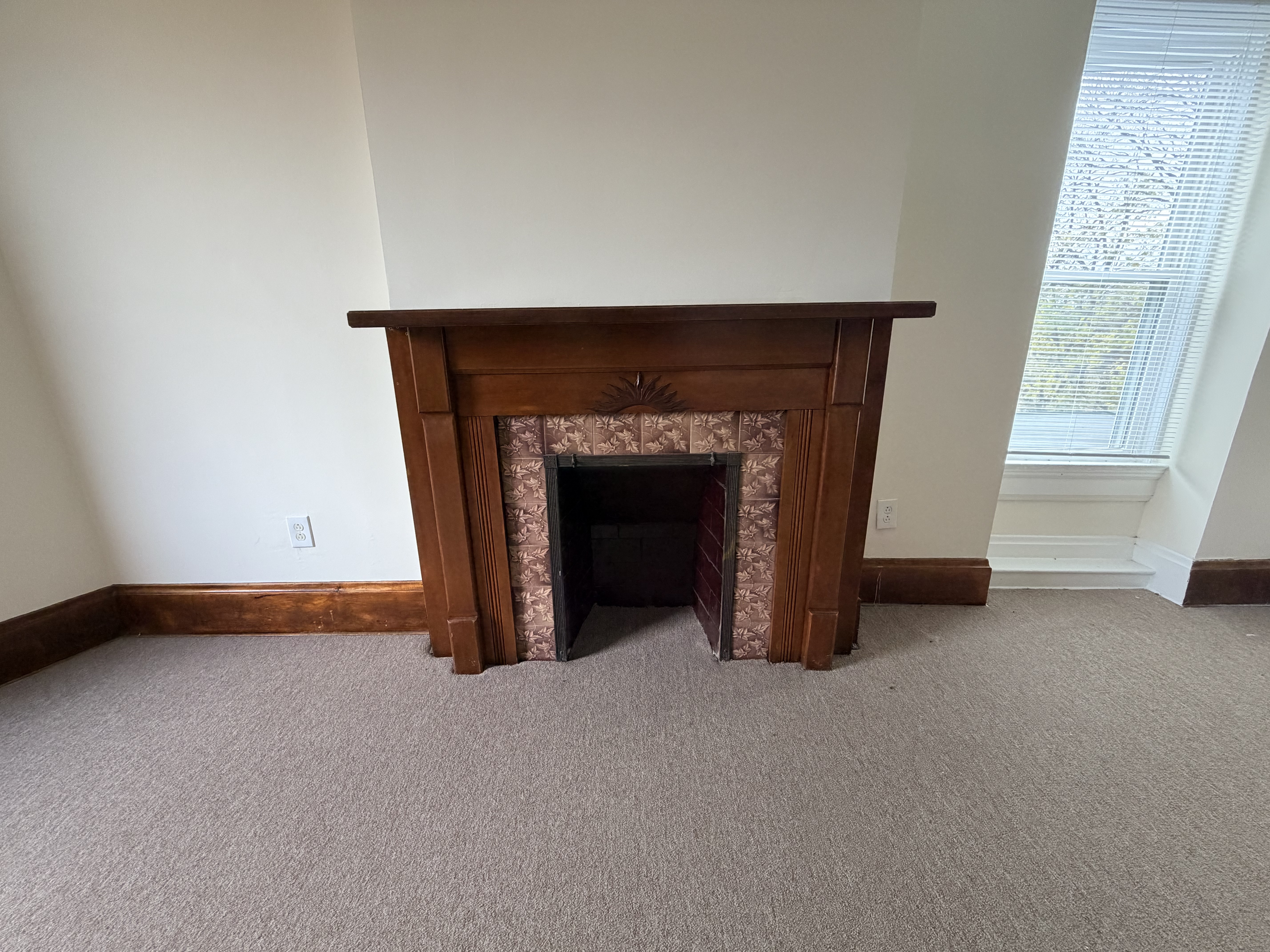
Walk through the Metz House at 6111 Madison Road and you'll keep running into the same thing: a fireplace. There are five left. Each has its own carved wood mantel and its own set of glazed tile, and none has been lit in generations. They're some of the best evidence we have of how people lived in this house before radiators, furnaces and thermostats, when warming a room meant tending a fire.
The house is named for Dr. Charles Louis Metz, the archaeologist, physician, school board member and longtime community leader remembered as "Mr. Madisonville." The Madisonville Community Urban Redevelopment Corporation restored it for offices in August 2019.
How these fireplaces were used
In the late 1800s and early 1900s, a fireplace wasn't decoration. It was how you heated a room. Most houses had no central system, so the main rooms each had their own hearth, and everyone in the family knew which room was warmest.
Look closely at the Metz House openings and you'll see they are small and shallow, framed in cast iron. That's a sign they were built to burn coal, not big logs. Across the country, coal overtook wood as the main fuel in the 1880s. A coal fire in a shallow firebox throws heat out into the room instead of up the chimney, and a small basket of coal burns hotter and longer than the same amount of wood.
The work of keeping these fires going was constant:
Coal was delivered by wagon (later by truck) and stored in the basement.
Every morning someone carried scuttles of coal upstairs to each fireplace and hauled the ashes back down.
Chimneys had to be swept regularly, because coal soot builds up and can catch fire.
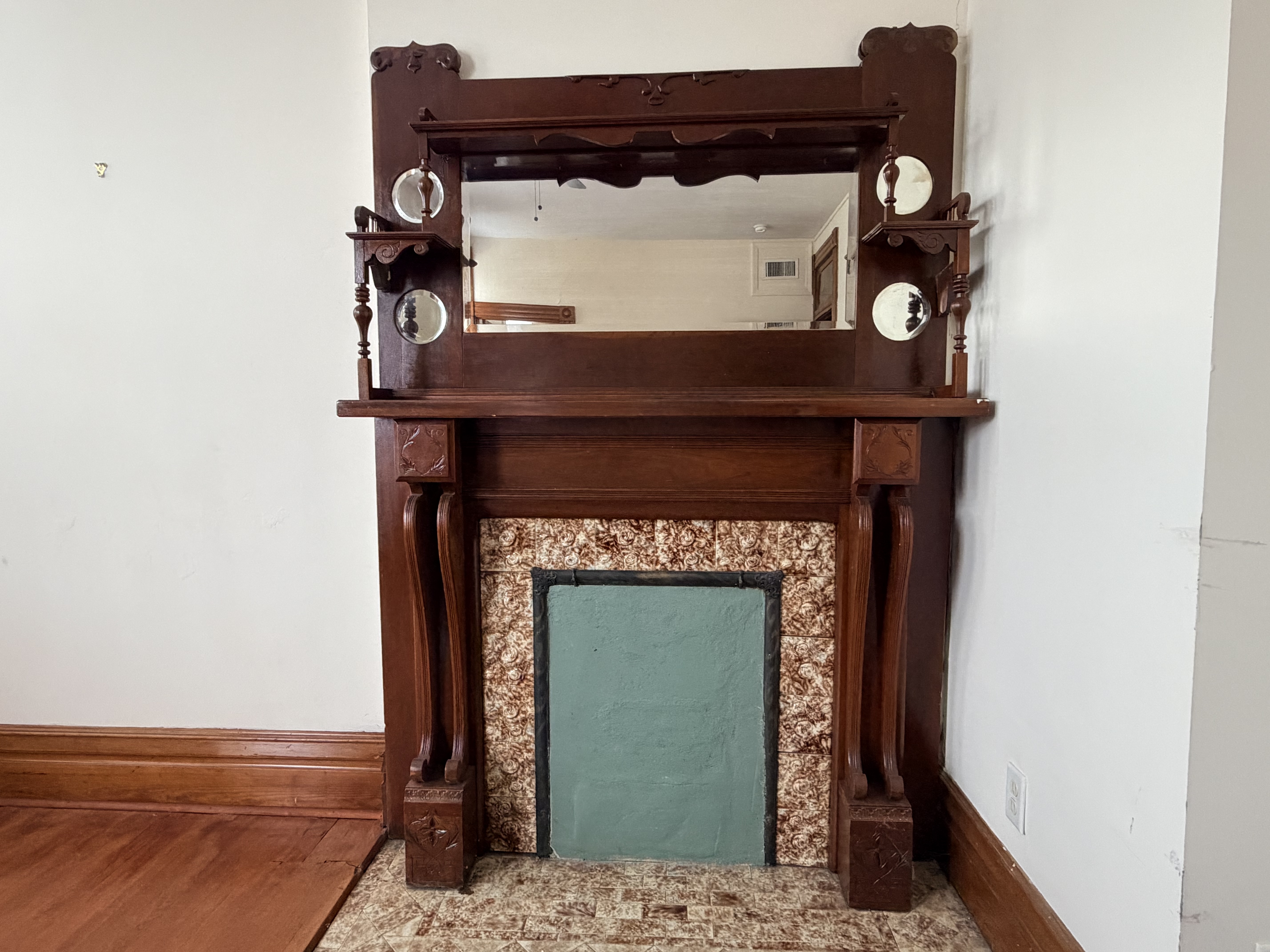
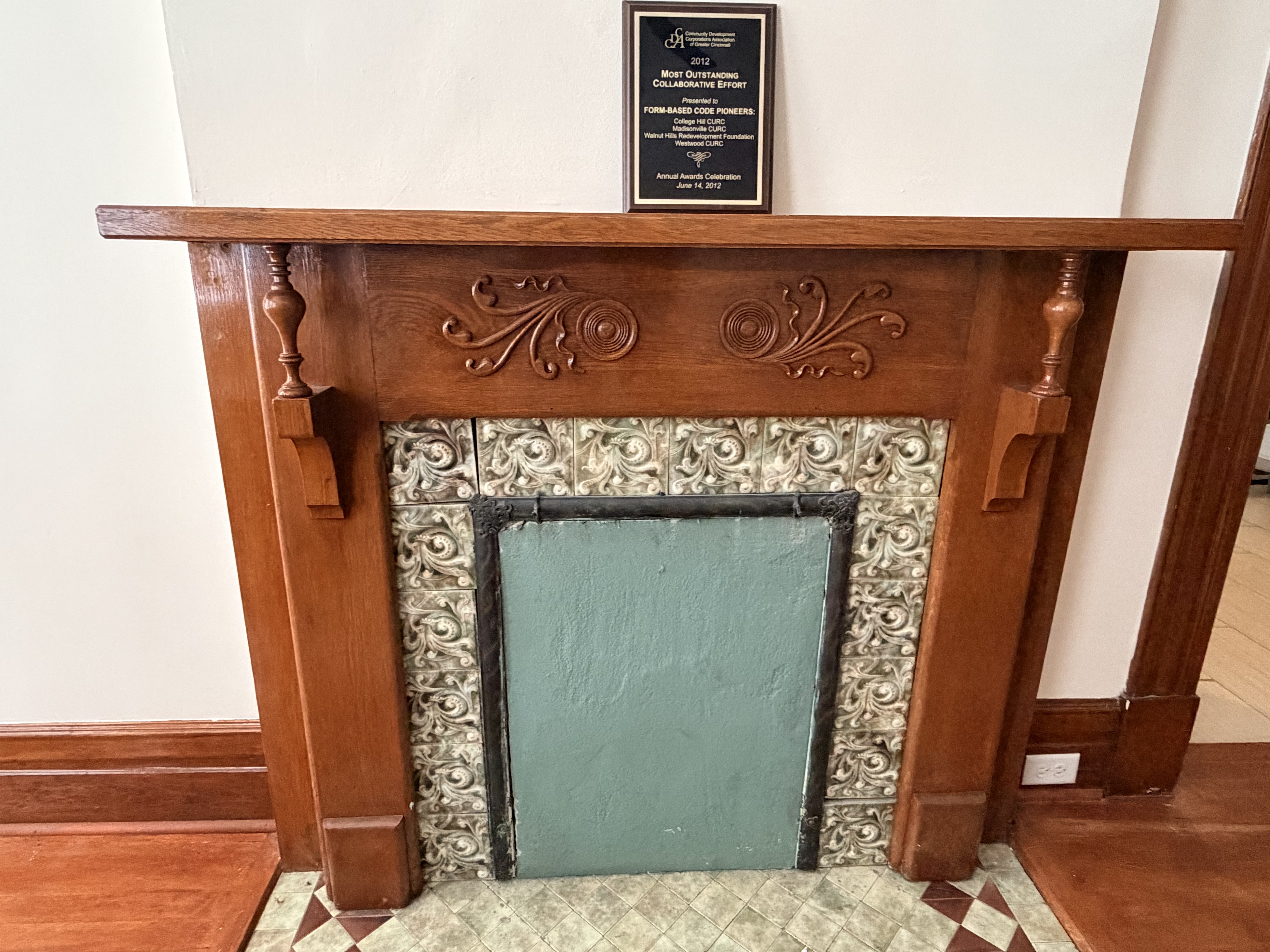
In summer, decorative cast-iron "summer covers" were fitted over the openings to hide the empty grate and keep down drafts and soot. The flat panels now sealing several of the Metz House fireplaces sit inside the same kind of iron frame.
By the 1890s, some Cincinnati households had also switched fireplaces over to gas. The city's gas company made "town gas" from coal and piped it into homes for lighting, and gas grates were a cleaner option for those who could afford one.
What they're made of
Each of the five fireplaces combines the same three parts, and each part says something about where and when it was made.
The mantels. The surrounds are carved hardwoods: quarter-sawn wood richly stained. The decoration follows the late-Victorian styles popular in Ohio Valley homes:
The overmantel fireplace is the grandest of the five. It has a tall mirrored back with a beveled center mirror, four round beveled mirrors, turned spindles, small display shelves and scroll-cut brackets. Overmantels like this were sold from catalogs and showed off a family's taste (and its china).
The fireplace with carved scrolls has hand-carved acanthus-leaf scrolls around two bull's-eye rosettes on the frieze, with turned spindles resting on carved corbels.
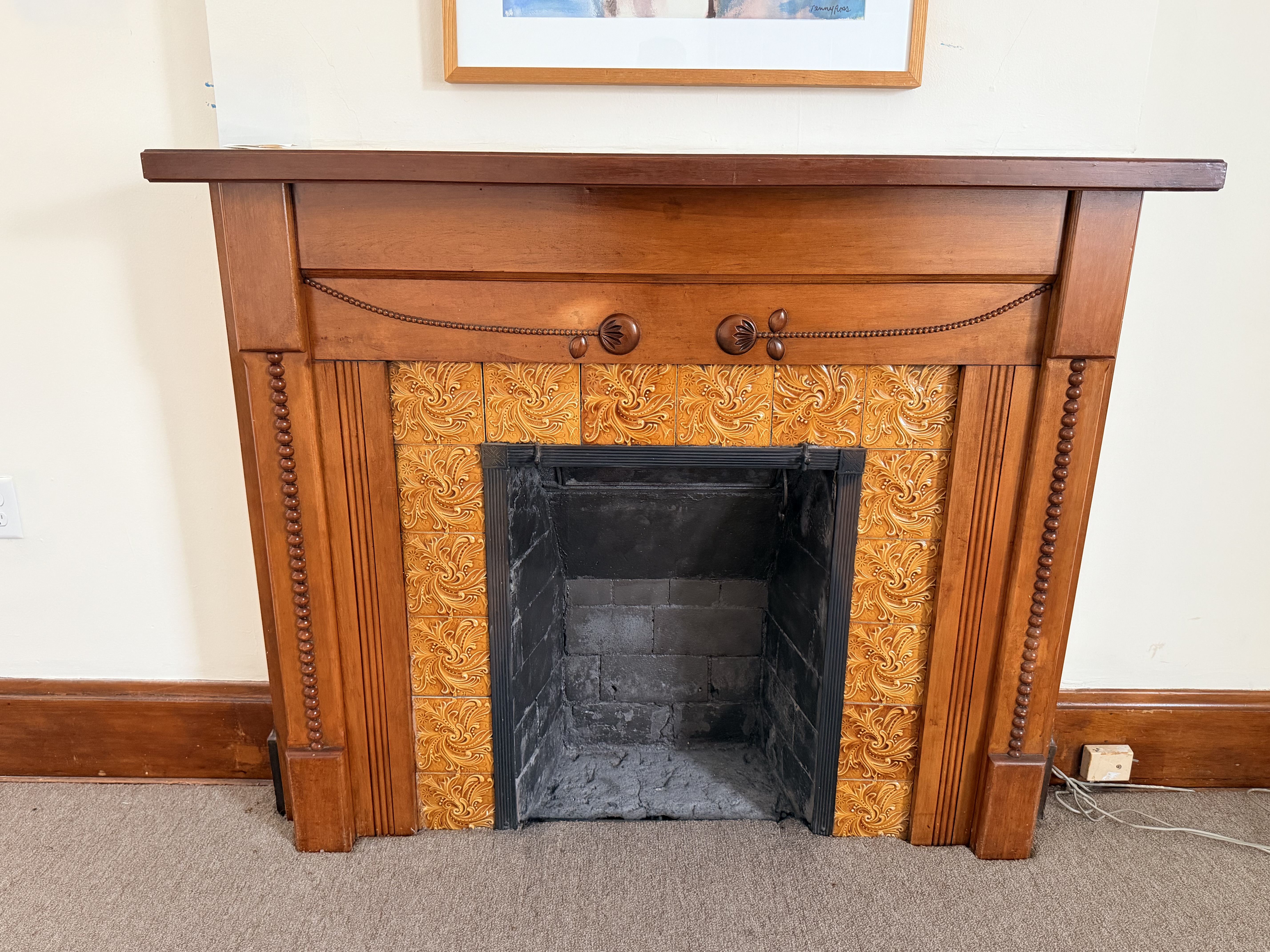
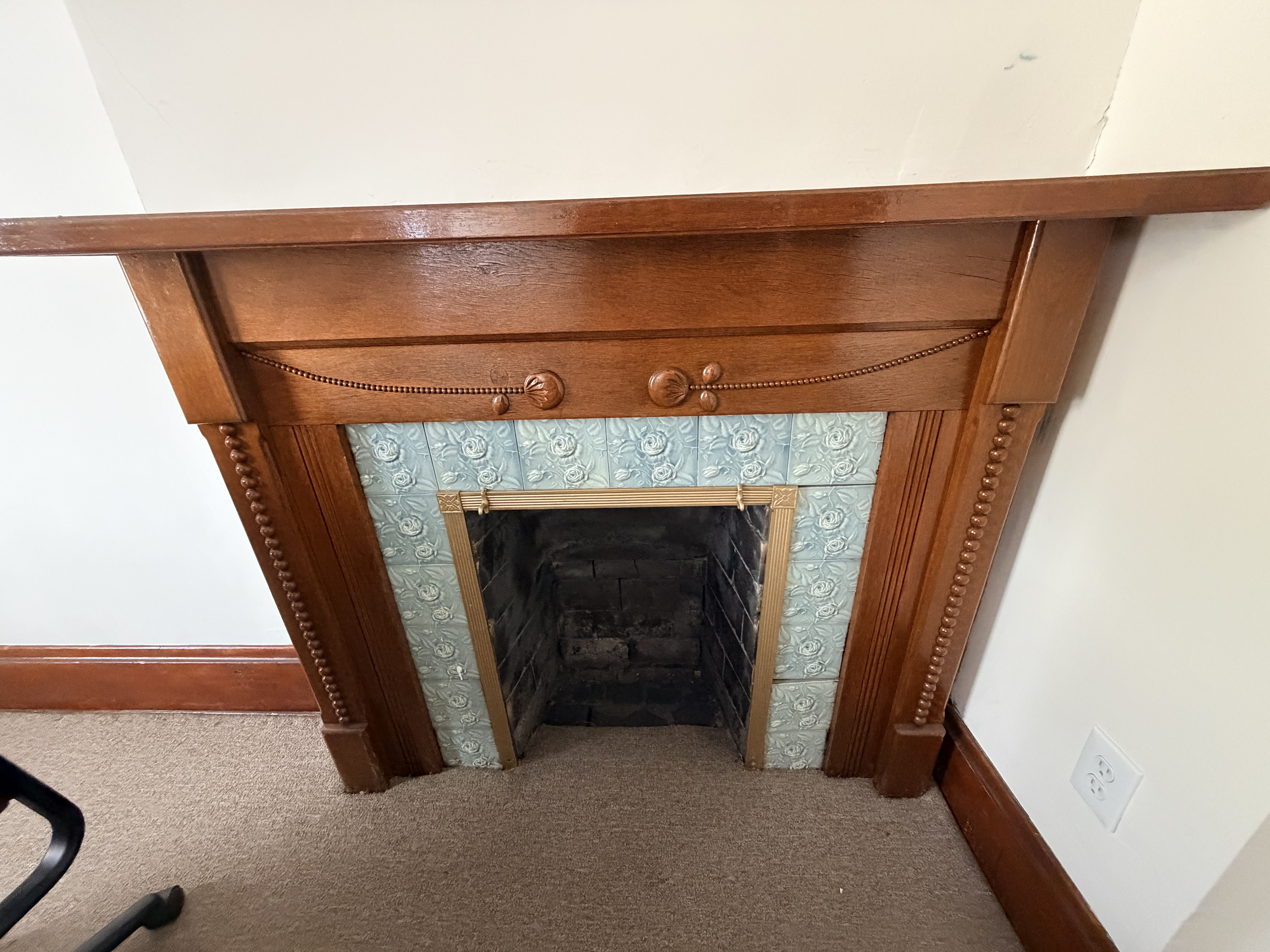
The two "spool" fireplaces have strings of turned wooden beads running down the pilasters. One has a carved swag with lotus medallions across the frieze, and the other has blue-green tile.
The sunburst fireplace has a single fan-shaped sunburst carved at the center of the frieze, a motif typical of the Eastlake and Queen Anne styles.
The tile. Every fireplace is framed in embossed, glossy glazed tile in a different color: amber-gold swirls, olive-green scrolls, chocolate-brown roses, plum ivy leaves and pale blue-green. Glazes that pool in the low parts of the raised pattern and shine on the high points were the height of fashion from the 1880s to the 1900s. The tiles did a job too. They kept heat and sparks off the wooden mantel and were easy to wipe clean of soot.
The hearths and fireboxes. In front of each opening is a tile hearth, some in small geometric tiles (like the red-and-cream diamond pattern) and some in mottled glazed tile. These protected the wood floors from falling embers. The fireboxes are lined with brick and framed by cast-iron surrounds with reeded edges and decorative corner blocks.
Made in the Ohio Valley
Cincinnati was one of the country's great centers for art tile, so tiles like these may well have been made close to home:
Cambridge Art Tile Works opened in Covington, Kentucky, just across the river, in 1887 to make enameled and embossed tile. After a merger it became the Cambridge Tile Manufacturing Company, which later moved to Hartwell in Cincinnati. Cambridge sold complete fireplace mantel and tile packages through catalogs.
Wheatley and Rookwood Pottery, both in Cincinnati, also made architectural tile. Rookwood had a tile department making fireplace mantels by about 1902.
We haven't confirmed who made the Metz House tiles (but I don't believe they are Rookwood). Makers often stamped their name on the back of each tile, so if one ever comes loose during maintenance, maybe we will find out.
Why the fires went out
The fireplaces didn't fall out of use all at once. It happened over several decades:
Smoke. Cincinnati, like Pittsburgh and St. Louis, burned soft bituminous coal, and on winter days the city was wrapped in soot. Citizens campaigned against it, and in 1907 the city passed a smoke ordinance that measured smoke against a darkness scale, set fines and created a smoke inspector's department.
Central heating. Starting around the 1920s, homes moved to one coal-fired boiler or furnace in the basement feeding radiators or ducts. One fire in the cellar replaced five in the living spaces.
Gas and electricity. After World War II, cheap natural gas, thermostats and forced-air furnaces made home coal heat obsolete. Cincinnati is still largely heated by natural gas today. Madisonville joined the city in 1911 and followed the same path.
Safety. These shallow fireboxes were designed for coal, not wood. The old brick chimneys are probably unlined, and after a century the mortar has weakened. Lighting a fire in one today without a full chimney inspection and modern liner could start a fire inside the walls or let carbon monoxide into the building. That matters even more now that the Metz House is an office building with tenants.
That's why the openings are sealed with painted panels: to keep out drafts, debris and the occasional curious bird.
Why they're still worth keeping
The fireplaces don't heat the building anymore, but they're still the centerpiece of each room. They're also a record of local craftsmanship, of Cincinnati's industrial past, and of the daily work families once did to stay warm. Keeping them as part of the restoration, rather than tearing them out, as happened in so many old houses, was a choice to keep that history visible.
The Metz House is currently for sale. If you are interested in touring the property for a possible purchase, please call Kim Douthit, Keller Williams Advisors at 513-998-5858.
MLS LINK
https://loginlax.rapmls.com/share/CIN/AQH68FkfcSyi3dq4EfGxvgBQVp6Kew


